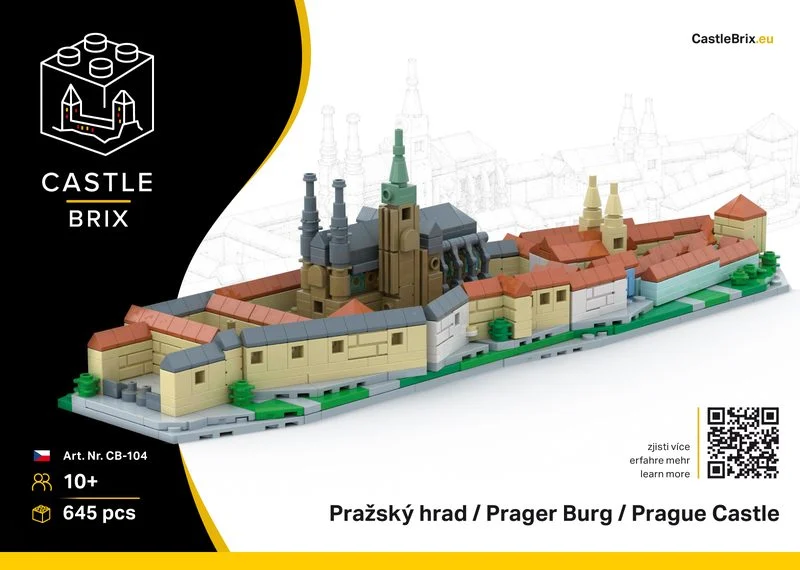
Prague Castle
Pražský hrad / Prager Burg
CastleBrix Connect / official digital guide to model kit 105
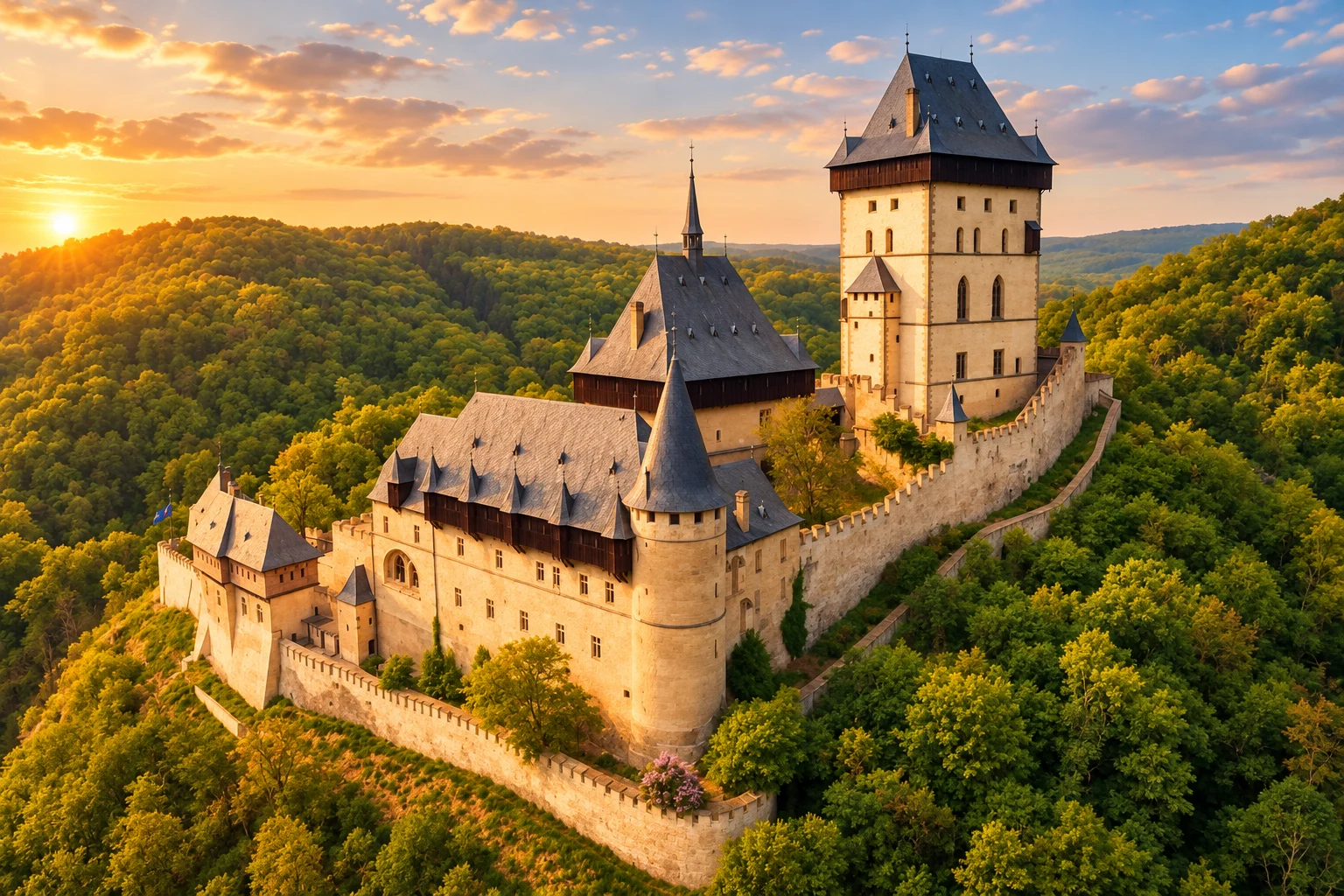
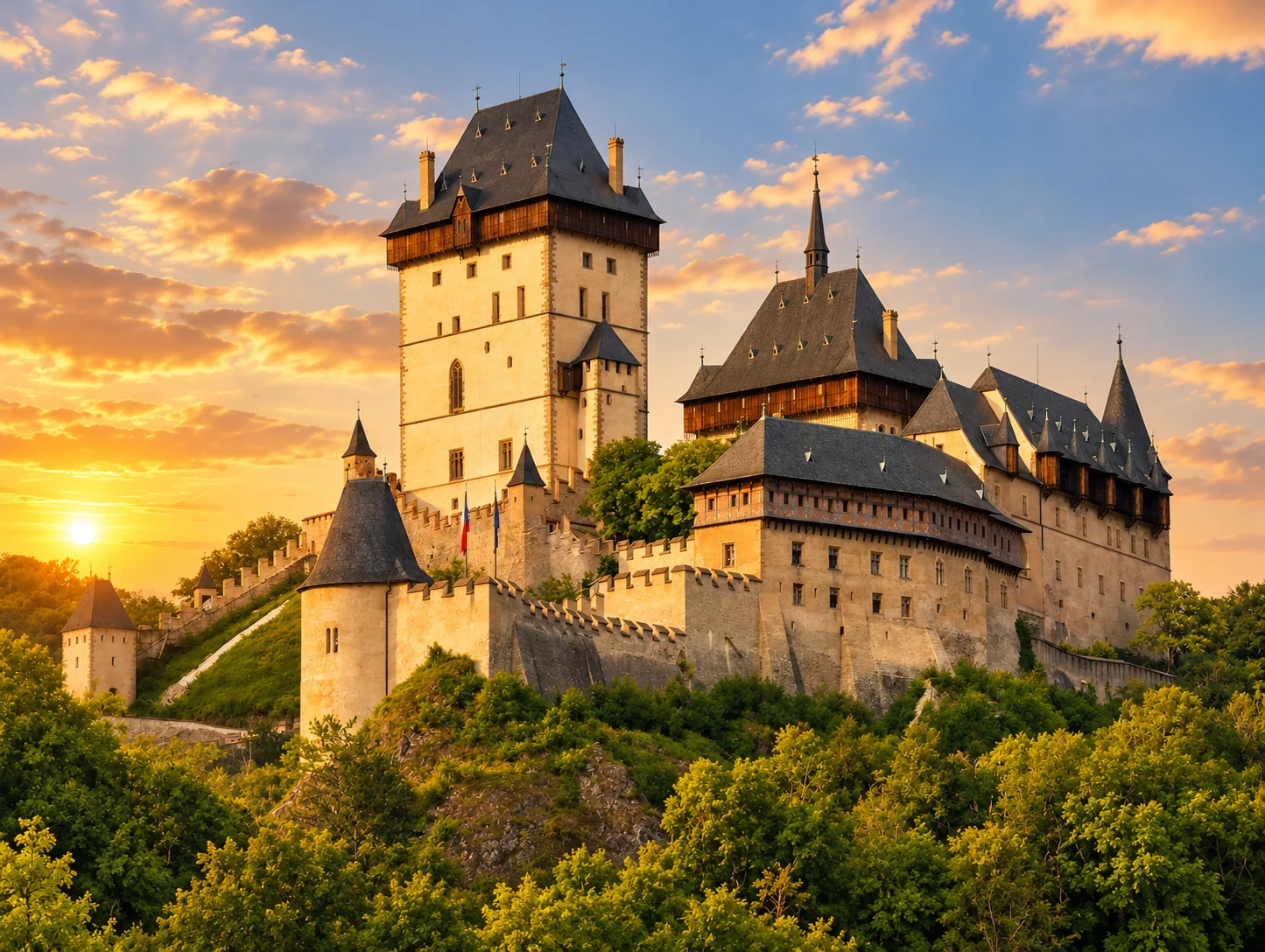
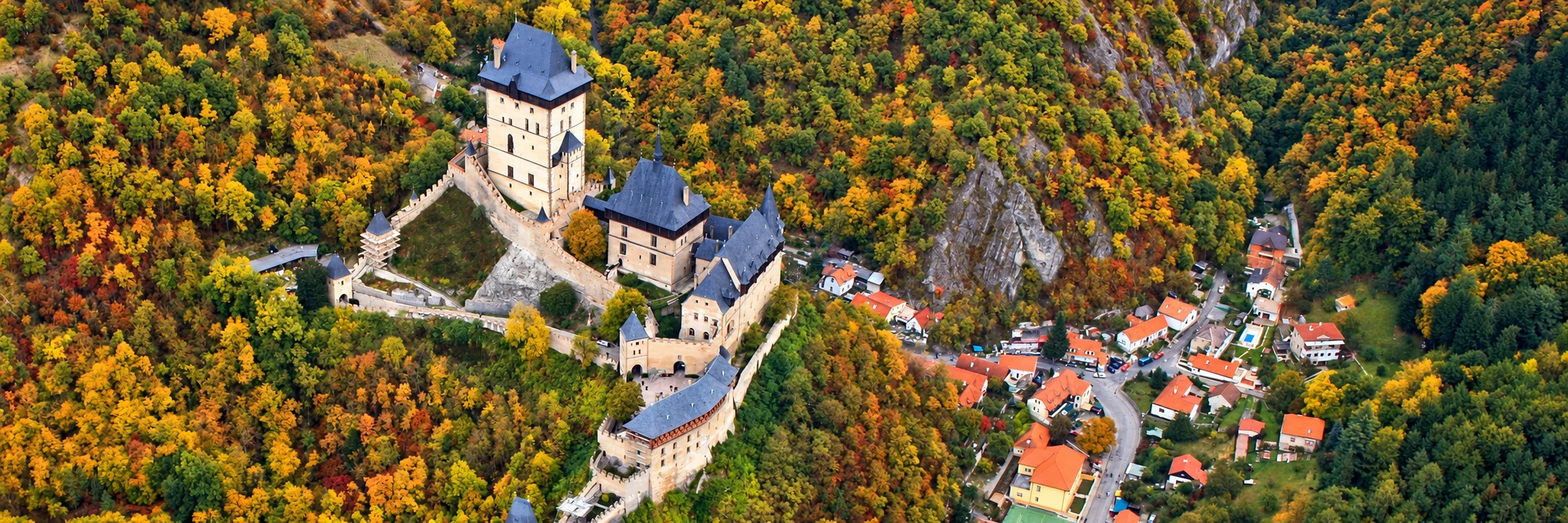
A castle built for the most precious treasures of the Empire. Charles IV founded Karlštejn in 1348 as a stately royal residence and, above all, as a safe place to keep his collections of holy relics and the Imperial Crown Jewels. The individual parts of the castle climb the rocky spur up to the monumental Great Tower with the Chapel of the Holy Cross – the most sacred place in the whole complex.
On the rocky spur above the Berounka valley, a new royal castle takes shape. Charles IV builds it as his own stately residence and as a secure repository for relics and the most precious treasures of the Empire.
On 9 February 1365, the Chapel of the Holy Cross in the Great Tower is consecrated. This marks the culmination of the main building phase of Karlštejn. The Imperial Crown Jewels and holy relics are placed in the chapel.
The forces of Prague lay siege to Karlštejn, but the fortress holds. Remains of the Hussite siege positions survive in the surrounding landscape to this day.
An extensive restoration led by Friedrich Schmidt and Josef Mocker restores the castle's medieval character as it was then imagined. It is this purist reconstruction that largely shapes the Karlštejn we know today.
Karlštejn is one of the most important castles in the Czech Republic. Visitors can walk through the former imperial residence and, on a selected tour route, also see the most precious castle chapels, including the Chapel of the Holy Cross.
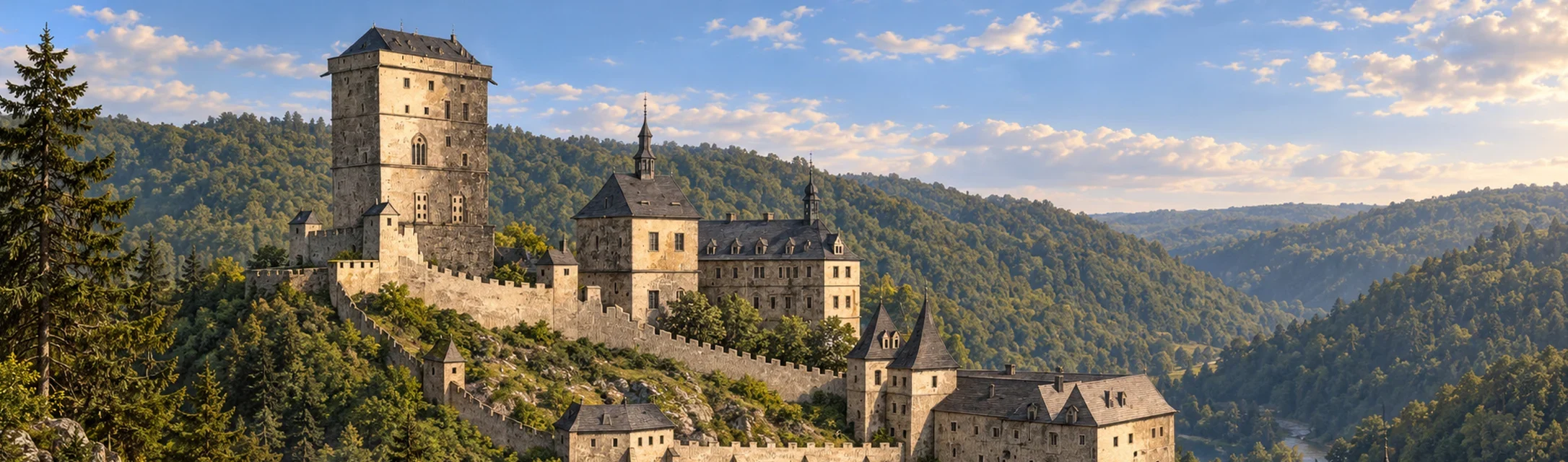
At Karlštejn, the arrangement of the buildings is no accident. The castle climbs the rocky spur, rising ever higher from the service and residential quarters. Above the outer bailey stands the Imperial Palace, above it the Marian Tower and, at the very top, the massive Great Tower. It was here that Charles IV had the most precious space of the castle created – the Chapel of the Holy Cross.
The monumental Great Tower reaches a height of around 60 metres and stands on the highest point of the castle spur. It was not merely the defenders’ last refuge. Its main purpose was to protect the imperial treasure kept in the Chapel of the Holy Cross.
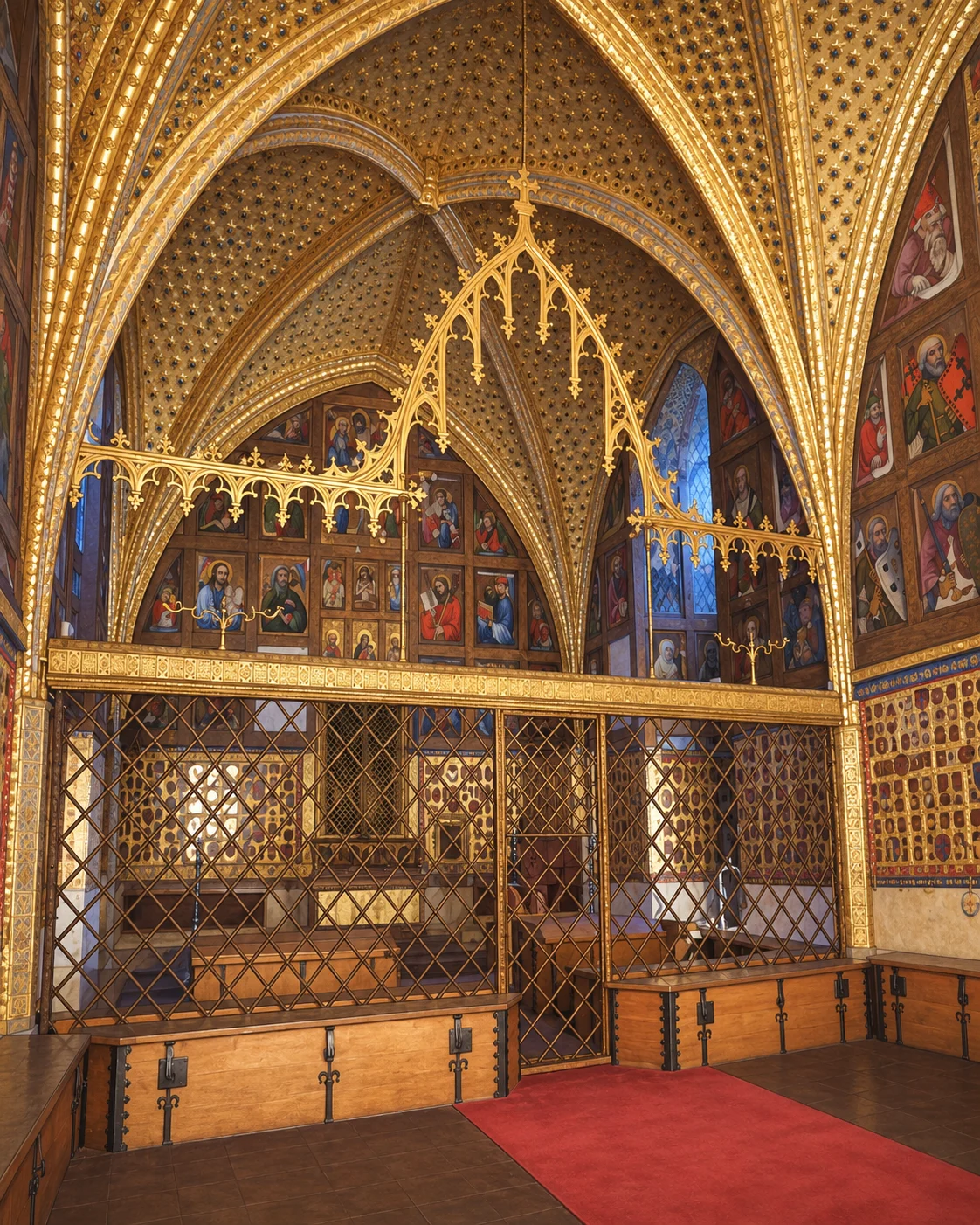
The walls of the Chapel of the Holy Cross are adorned with gilded surfaces, precious stones and a unique set of panel paintings by Master Theodoric and his workshop. Originally around 130 paintings of saints were created, forming a symbolic “heavenly host” guarding the treasures kept there. Today the surviving set of 129 paintings is one of the most important ensembles of European medieval painting.
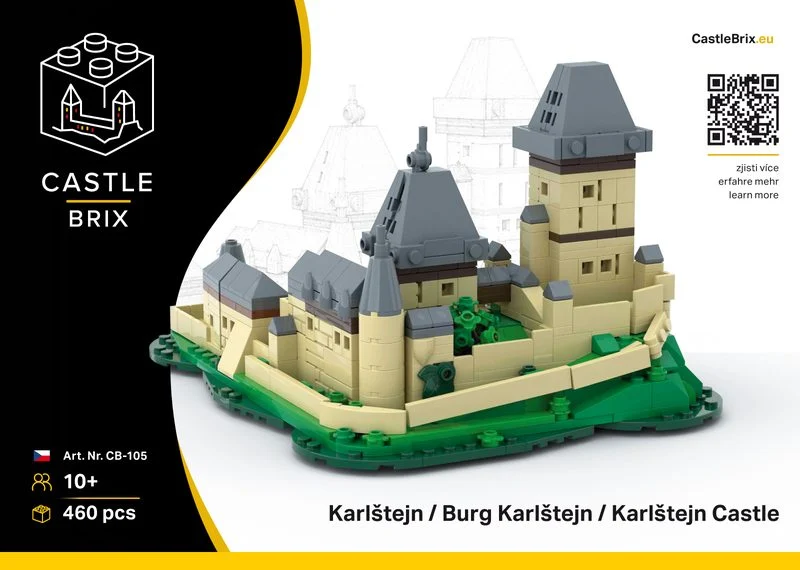
Model CB-105 preserves precisely Karlštejn’s characteristic stepped layout. The individual buildings rise one above the other, with the Great Tower at the top. This keeps the silhouette by which Karlštejn can be recognised almost instantly.
In 1422, the Hussite forces of Prague laid siege to Karlštejn. Although the fighting lasted several months, the castle held out. Traces of the siege works are still visible in the landscape around Karlštejn today and rank among the exceptional archaeological records of medieval warfare.
During the restoration of Karlštejn at the end of the 19th century, a collection of medieval and early modern objects was found, known today as the Karlštejn Treasure. It was probably hidden during the Hussite Wars, and for several centuries nobody knew of it.
The Chapel of the Holy Cross is still surrounded by an extraordinary set of 129 panel paintings of saints, prophets and Church Fathers. It is the largest surviving set of medieval panel painting of its kind in the world.
The Well Tower conceals a shaft 78 metres deep. When sinking it, however, the miners found no sufficient spring, so water had to be fed into the shaft through an underground channel from a nearby stream. According to legend, this solution was such a closely guarded secret that the workers who built the channel were not allowed to reveal its existence. The first part is documented history; the story of the workers’ fate belongs to the realm of legend.
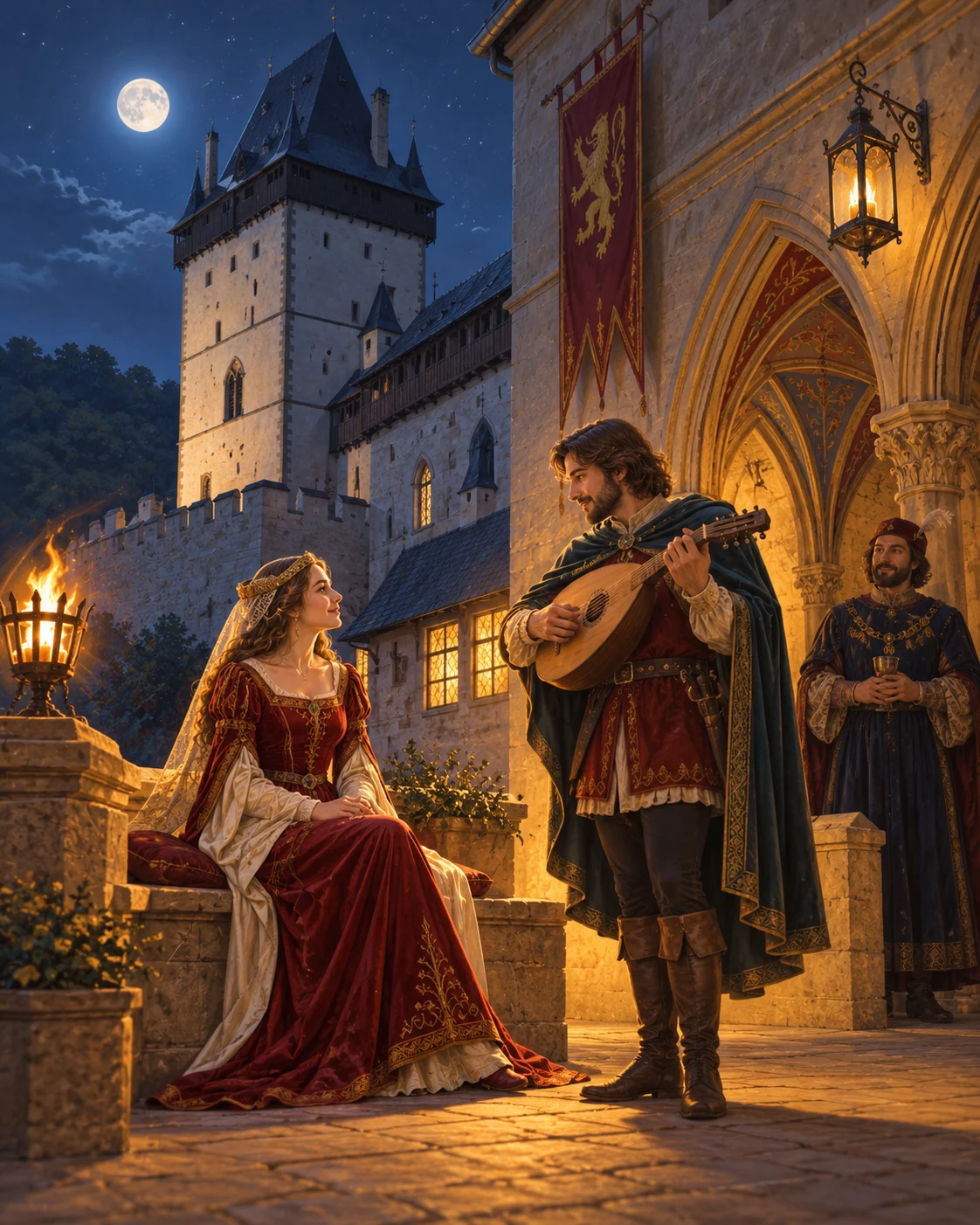
One of the most famous Czech castle legends claims that Charles IV forbade women to stay at Karlštejn. No such general ban existed. The strict rules concerned above all the sacred space of the Great Tower and intimate relations in its vicinity. The later legend became the basis of Vrchlický’s A Night at Karlštejn and subsequently of the famous film.
The original of the model stands above Kašperské Hory. In the town below the castle, an exhibition is also taking shape where you can see its six-metre version.
Pražský hrad / Prager Burg
Hrad Rabí / Burg Rabí
Hrad Kašperk / Burg Kašperk