
Kašperk Castle
Hrad Kašperk / Burg Kašperk
CastleBrix Connect / the official digital guide to model kit 104
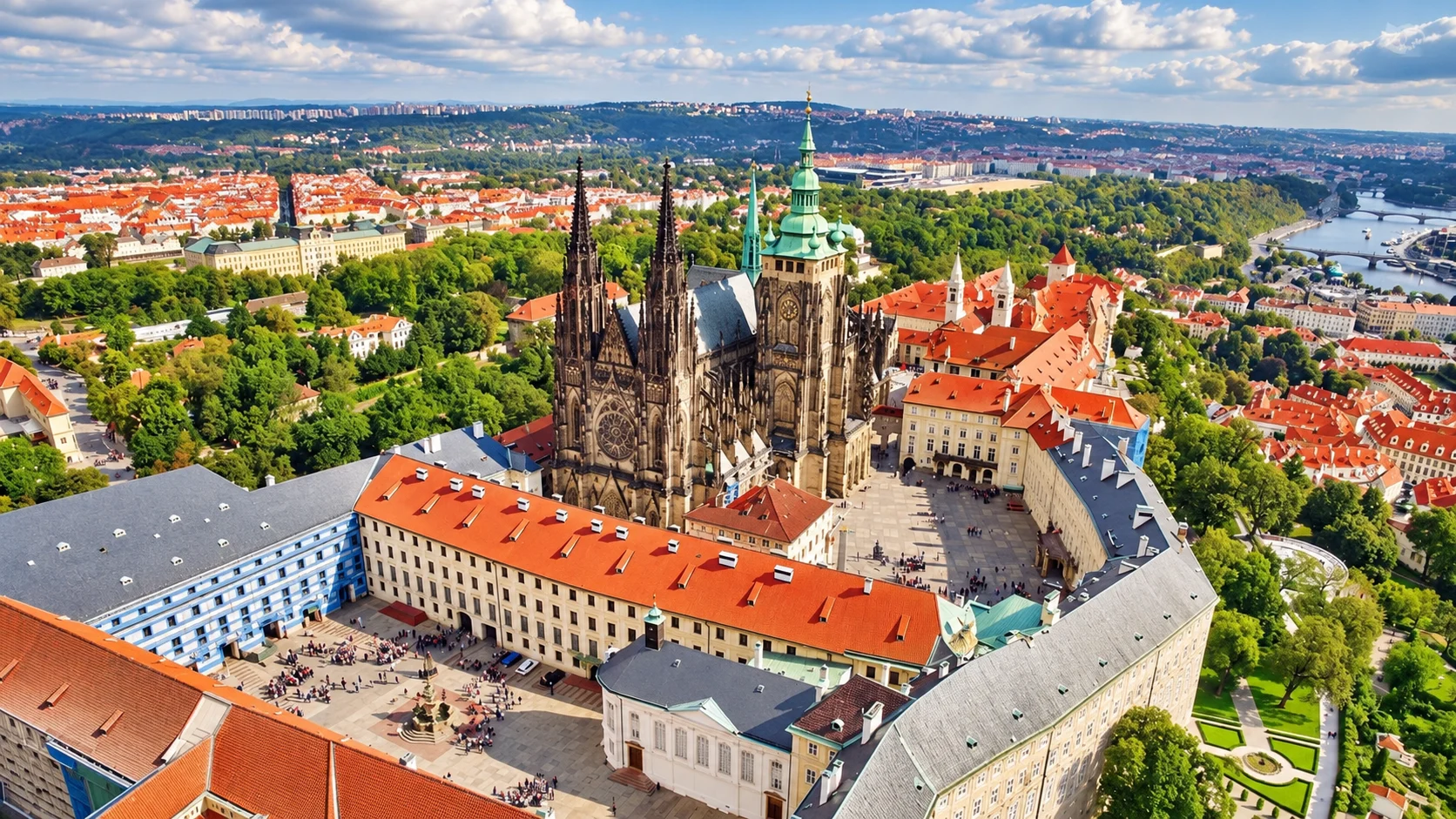
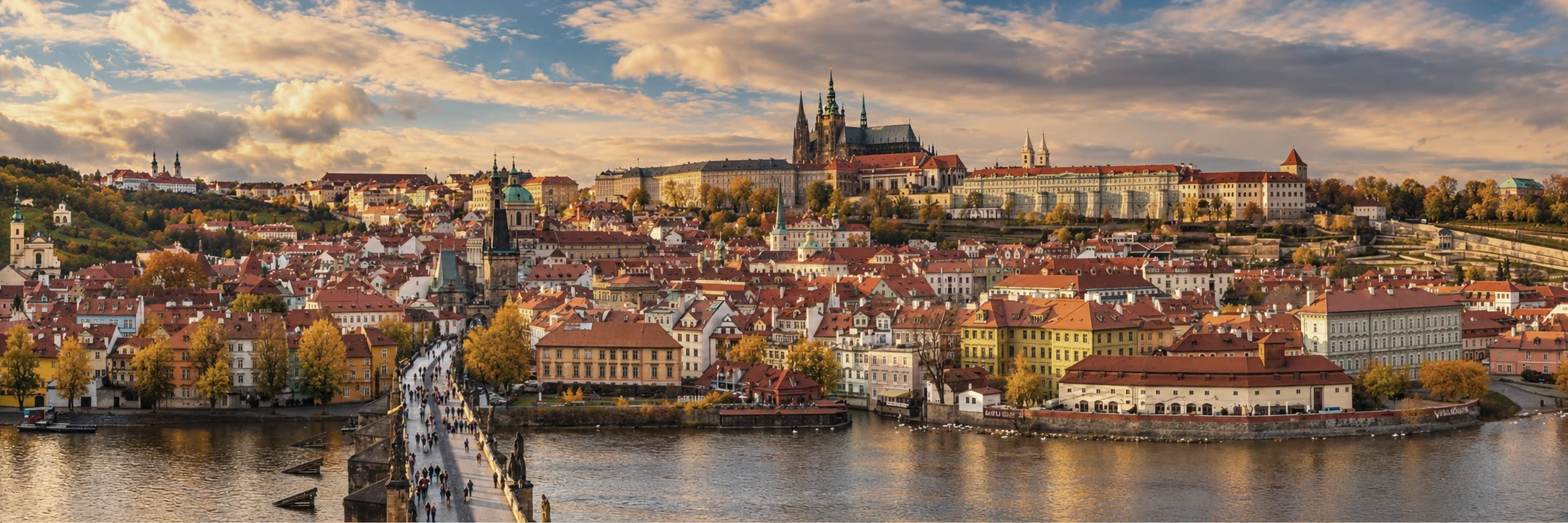
Prague Castle has been the centre of the Czech state for more than a thousand years. It was founded around 880 by Prince Bořivoj of the Přemyslid dynasty. Over the following centuries it became the seat of Bohemian princes and kings, of emperors and finally of presidents. Today its grounds of almost 70,000 m² bring together Romanesque, Gothic, Renaissance, Baroque and modern buildings. According to the Guinness Book of Records, it is the largest coherent castle complex in the world.
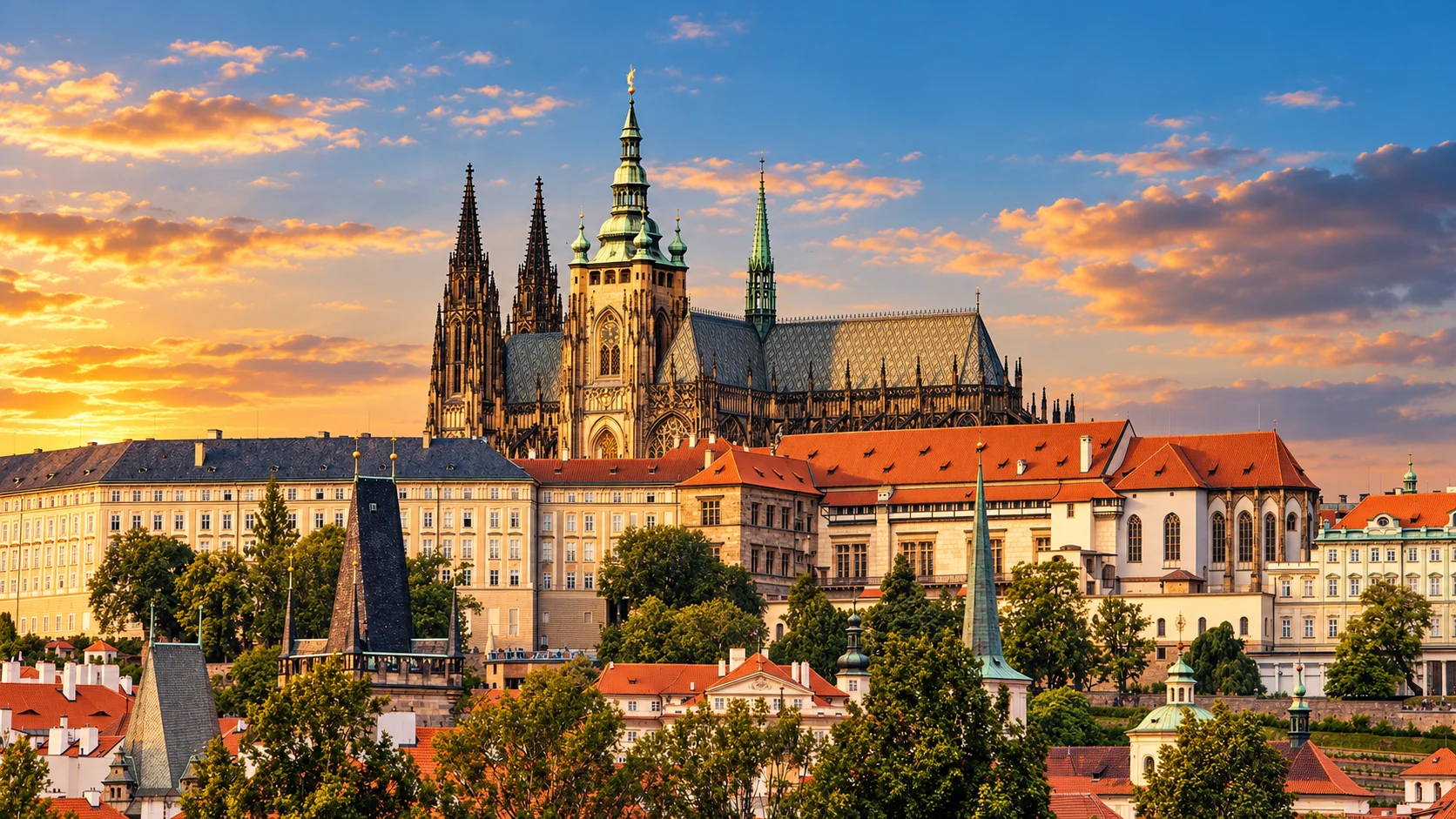
On the promontory above the Vltava, the Přemyslids build a fortified settlement protected by a ditch and a rampart. The first masonry building is the Church of the Virgin Mary. The castle gradually becomes the centre of the emerging Czech state.
Under Charles IV, Prague Castle becomes an imperial residence for the first time. The Royal Palace is extended, the fortifications are strengthened, and in 1344 construction of the Gothic St Vitus Cathedral begins.
Vladislav Jagiellon returns to Prague Castle. New fortifications with the Daliborka tower and other towers are built, and Benedikt Ried creates the monumental Vladislav Hall, one of the high points of late Gothic architecture.
On 23 May 1618, two governors and a secretary are thrown from the windows of the Bohemian Chancellery. The Defenestration of Prague sets off the Bohemian Revolt, which becomes the first conflict of the Thirty Years' War.
After the founding of Czechoslovakia, Prague Castle becomes the seat of the president. The architect Josip Plečnik remodels the courtyards, gardens and state rooms, and in 1929 St Vitus Cathedral is ceremonially completed. The castle remains the seat of the head of state to this day.
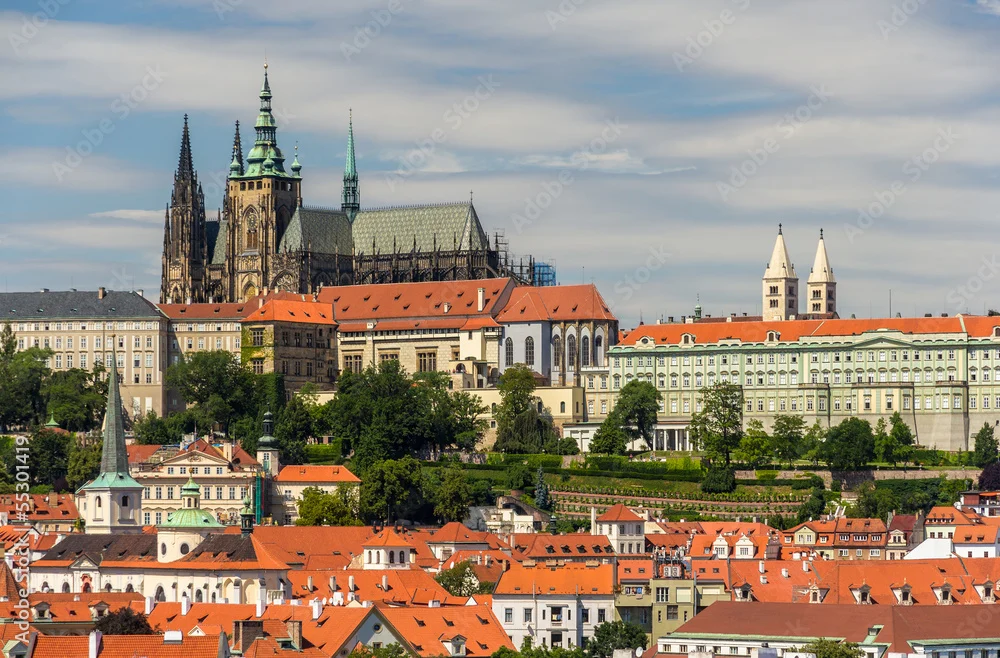
Prague Castle is neither a single building nor the work of a single era. Its present form grew layer by layer – from an early medieval fortified settlement through a Romanesque palace and Gothic buildings to Renaissance, Baroque and modern alterations. That is why a visitor can walk through the architecture of almost the entire history of the Czech state in a matter of minutes.
As early as around 925, the Rotunda of St Vitus stood on the site of today’s cathedral. In 1344 Charles IV began building a great Gothic cathedral, on which Matthias of Arras and Peter Parler worked. The Hussite Wars halted construction in 1419, and the present western part was only added during the neo-Gothic completion in the 19th and 20th centuries. The cathedral was ceremonially completed in 1929.
Within the walls stand palaces, churches, a monastery, towers, gardens and the tiny houses of Golden Lane. Alongside the monumental spaces reserved for the rulers, the castle was for centuries also home to clergy, soldiers, craftsmen, servants and the residents of the small houses built directly into the fortifications.
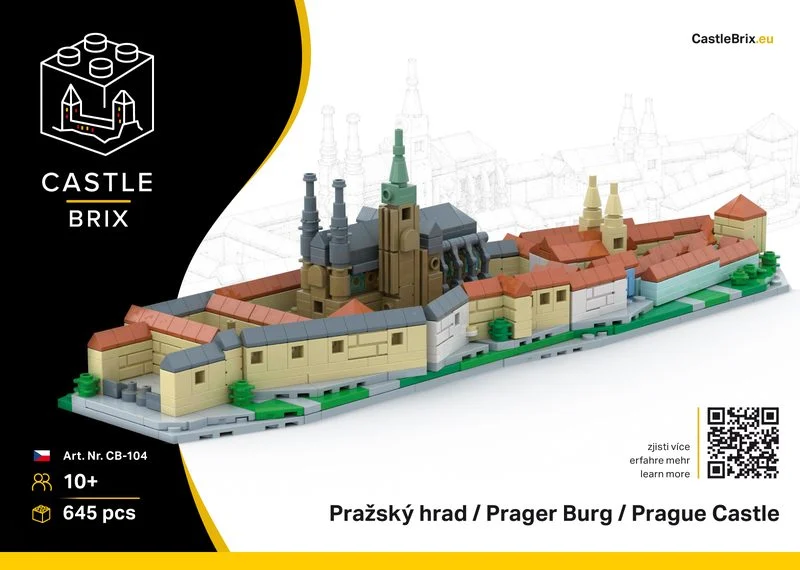
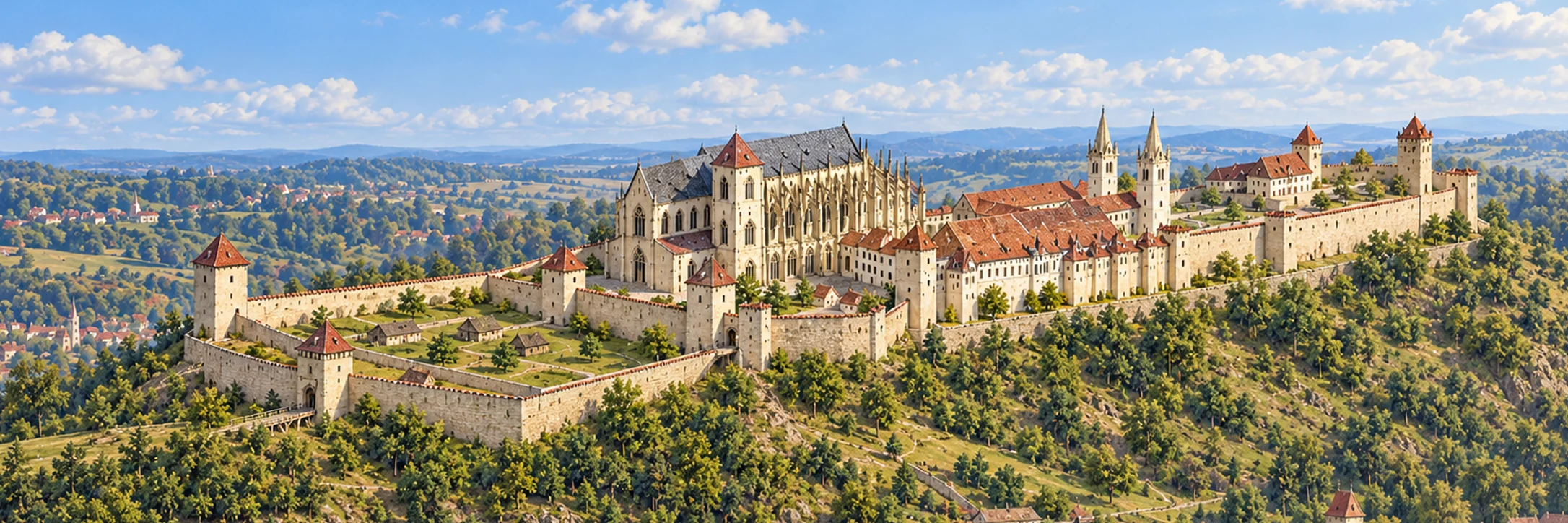
Model CB-104 translates the exceptionally long and intricate complex into a compact format. It retains the castle’s characteristic elongated silhouette, the dominant St Vitus Cathedral, the sequence of palace buildings and the red roofs. The result is not a model of a single building, but a miniature image of the entire castle complex.
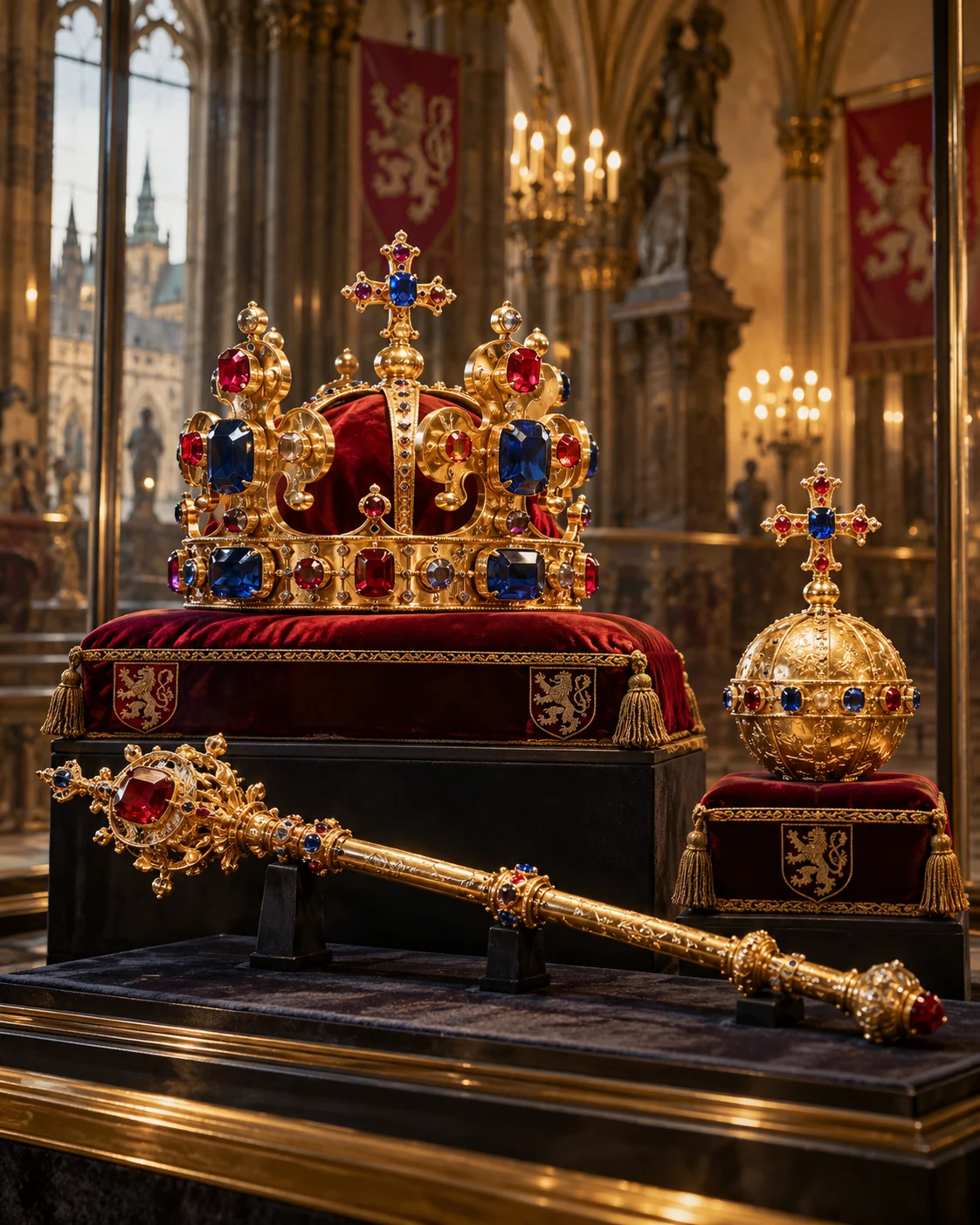
The Bohemian crown jewels are kept in the crown chamber of St Vitus Cathedral behind a door with seven locks. To take them out, all seven key holders must come together – among them the President of the Republic, the Prime Minister, the Archbishop of Prague and the heads of both chambers of Parliament. The tradition of the seven keys goes back to the return of the jewels from Vienna in 1791.
Under Rudolf II, a Lion Court with lions and other exotic animals operated beside the castle. The emperor grew fond of the lion Mohamed, for whom Tycho Brahe is said to have drawn up a horoscope with a constellation much like Rudolf’s own. By a remarkable historical coincidence, the emperor died only a few days after his lion.
The Daliborka tower takes its name from the knight Dalibor of Kozojedy, who was imprisoned here in 1498. According to the famous legend, he learned to play the violin in prison, and the people of Prague came to the foot of the tower to listen to his music. In reality, however, the violin in its present form only reached Bohemia later – the legend probably stems from the old saying “necessity taught Dalibor to fiddle” and from his interrogation under torture.
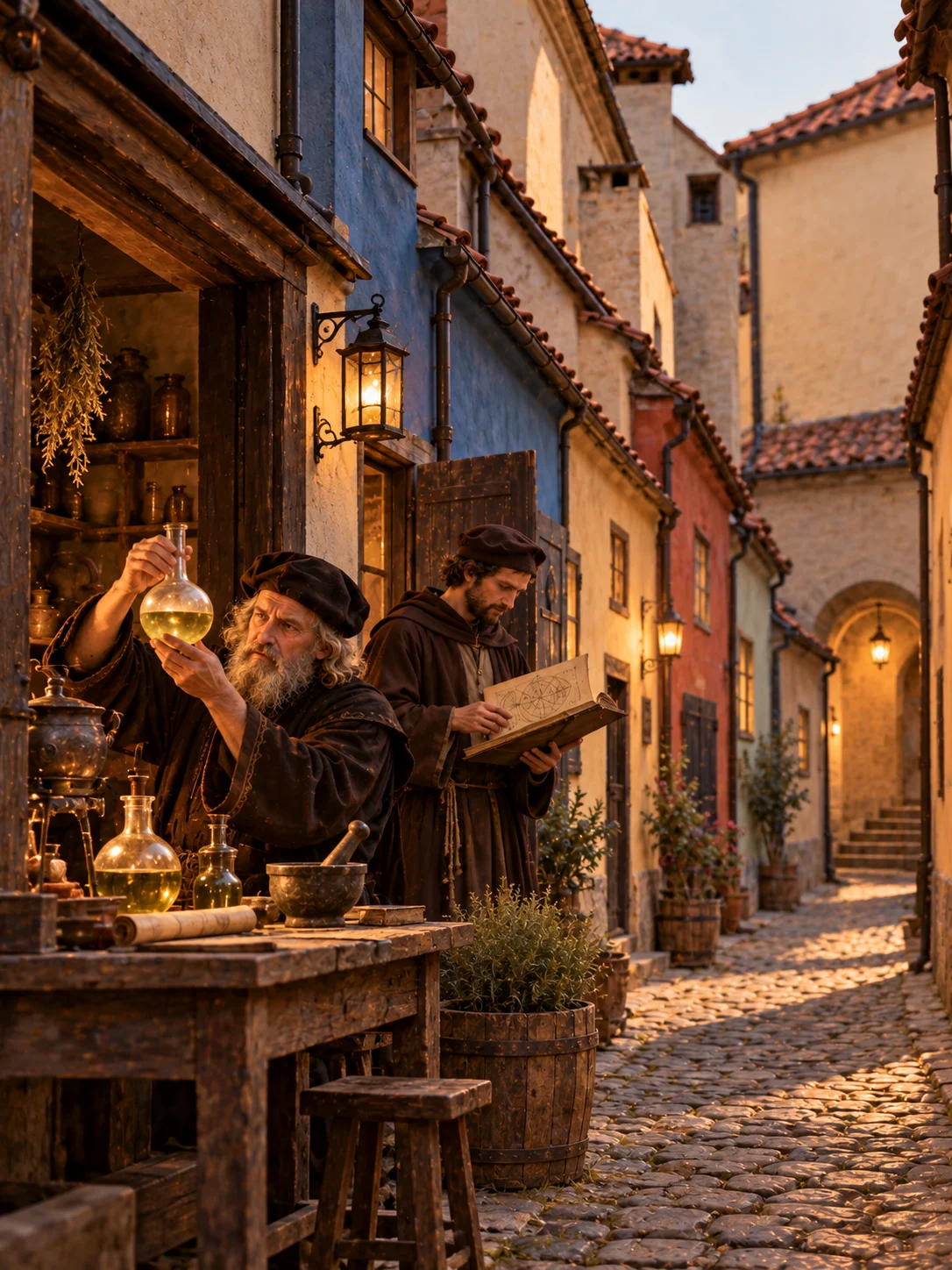
One of the most widespread castle legends claims that Rudolf II’s alchemists made gold in the little houses of Golden Lane. Historical sources do not confirm this. The houses were built mainly as homes for the castle marksmen, and later craftsmen, goldsmiths and poorer residents lived there. In the story of Golden Lane, the alchemists are a later romantic invention.
The largest bell in the Czech Republic, Sigismund, weighs around 15 tonnes. According to legend, if its clapper – the bell’s ‘heart’ – breaks, great misfortune will follow. When the clapper really did break on 15 June 2002, devastating floods followed in August. It is, of course, a legend, not a causal link.
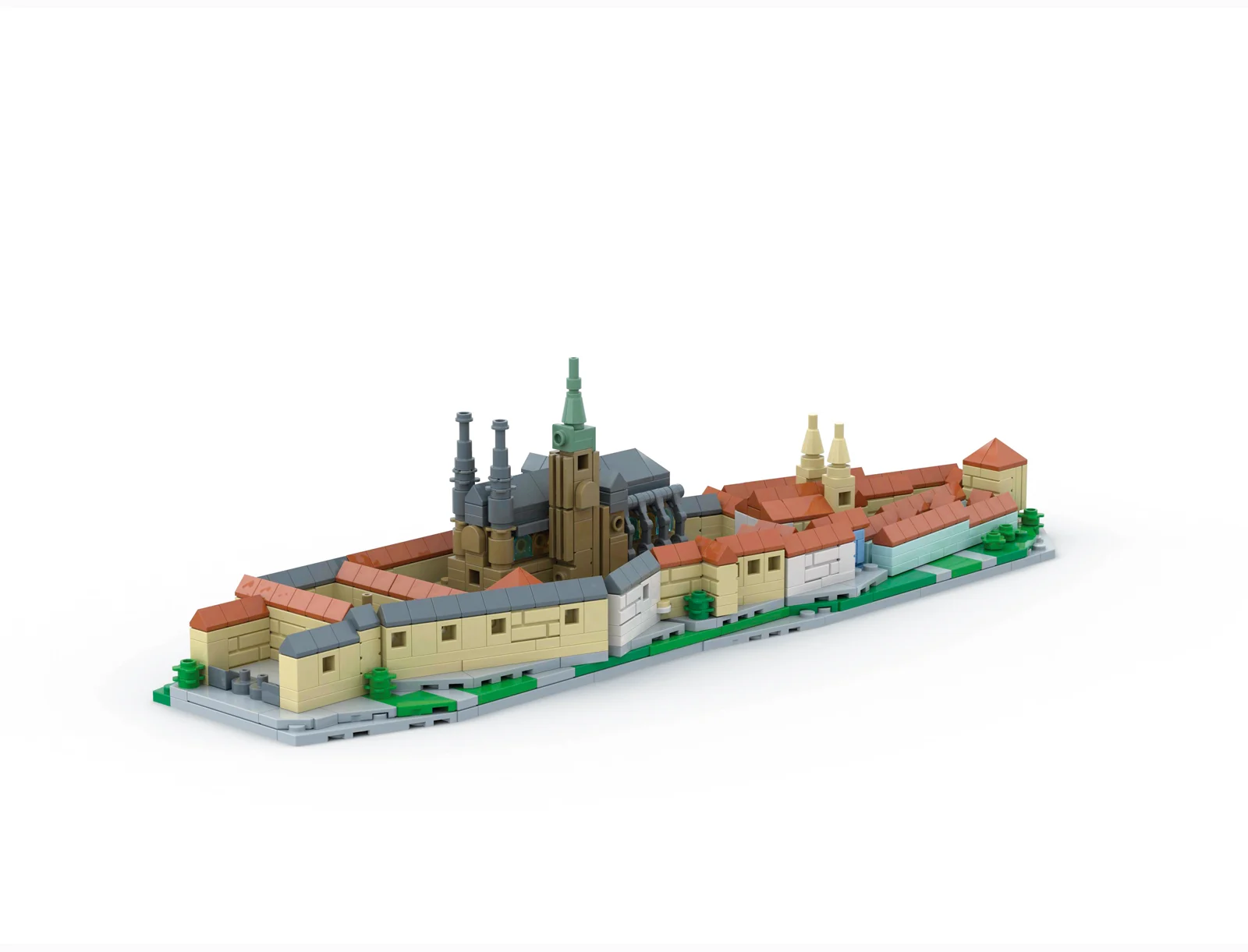
A timelapse from the first piece to the finished model.
The original of the model stands above Kašperské Hory. In the town below the castle, an exhibition is also taking shape where you can see its six-metre version.
Hrad Kašperk / Burg Kašperk
Hrad Rabí / Burg Rabí
Hrad Velhartice / Burg Velhartice