
Kašperk Castle
Hrad Kašperk / Burg Kašperk
CastleBrix Connect / the official digital guide to model kit 102
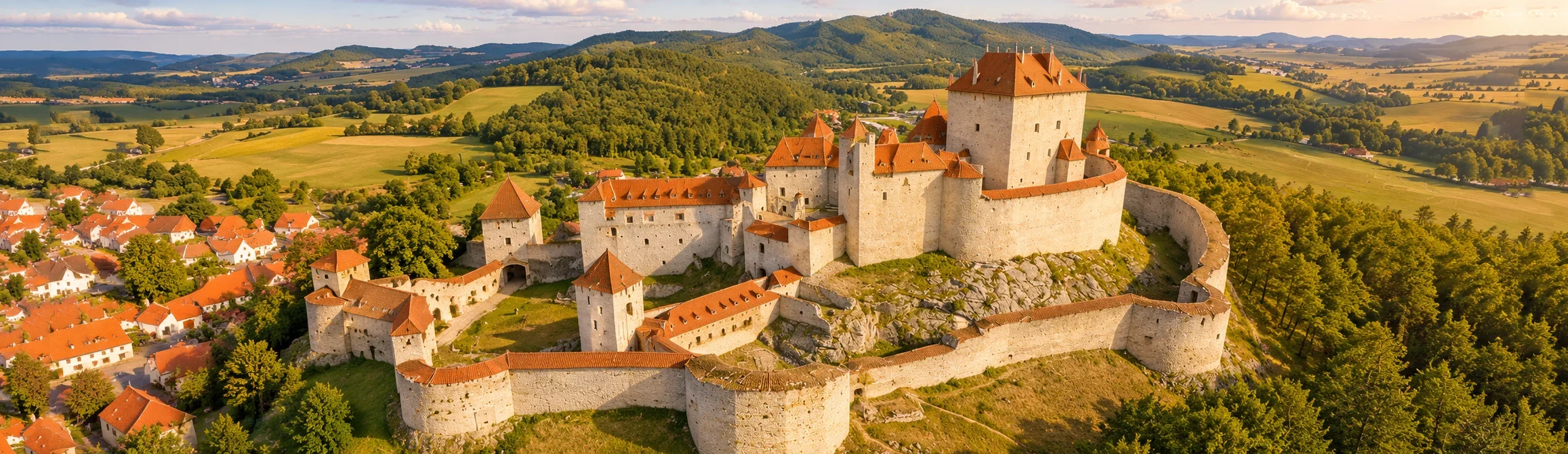
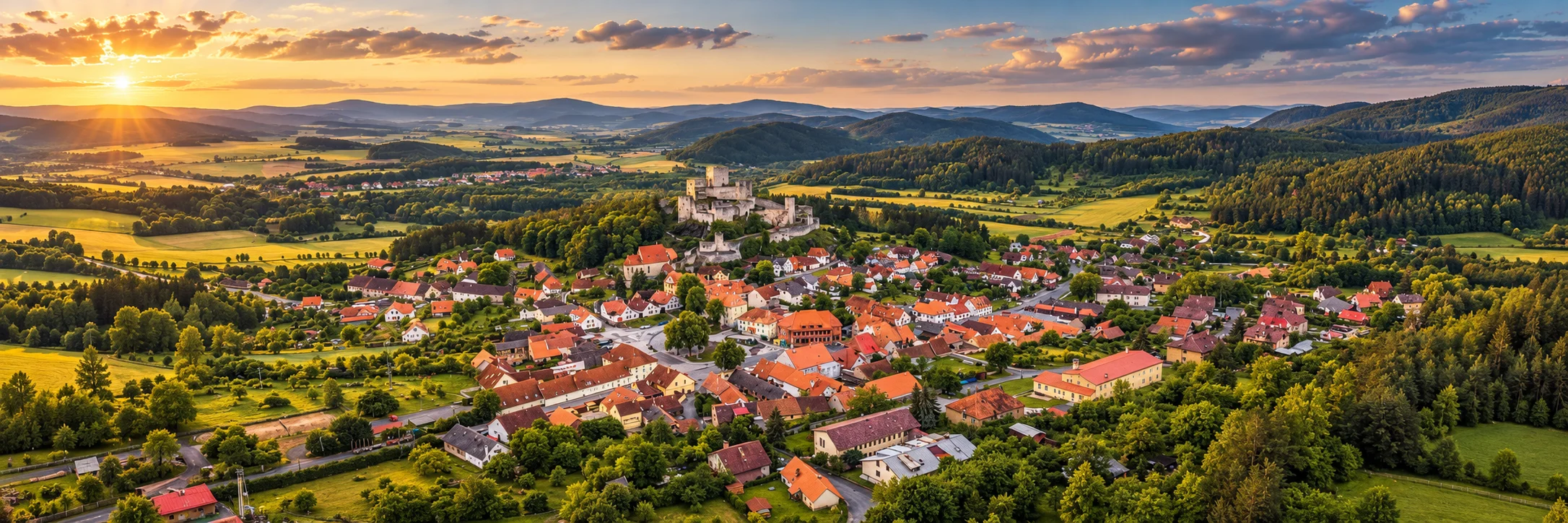
The most extensive castle ruin in Bohemia. What began as a nobleman's seat gradually grew into a mighty fortress with extensive fortifications, artillery bastions and a dominant residential tower.
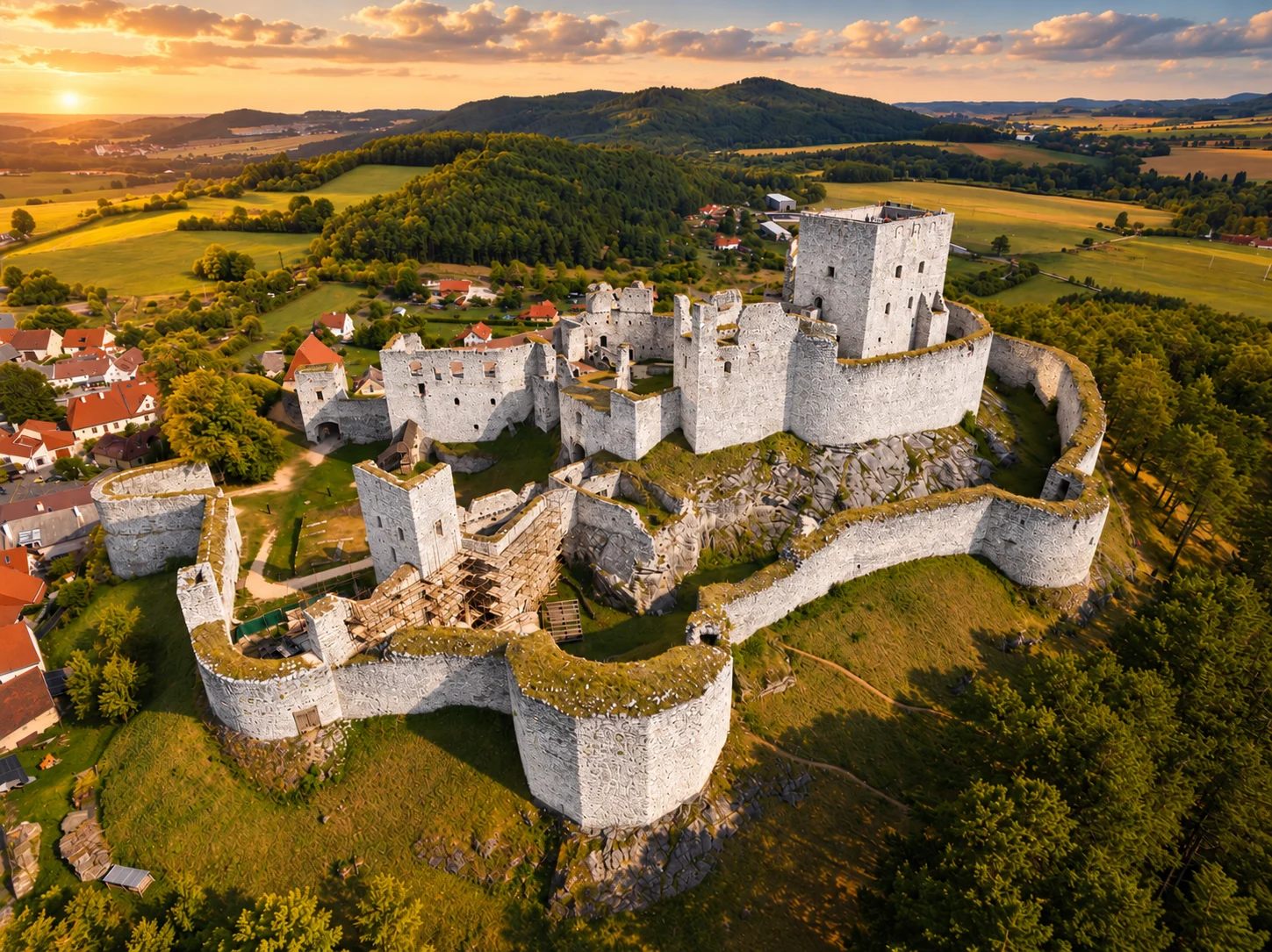
On a rocky hill above the River Otava a nobleman's seat is founded, which the Lords of Rýzmberk choose as their family castle. The originally modest castle gradually grows into an ever larger fortress.
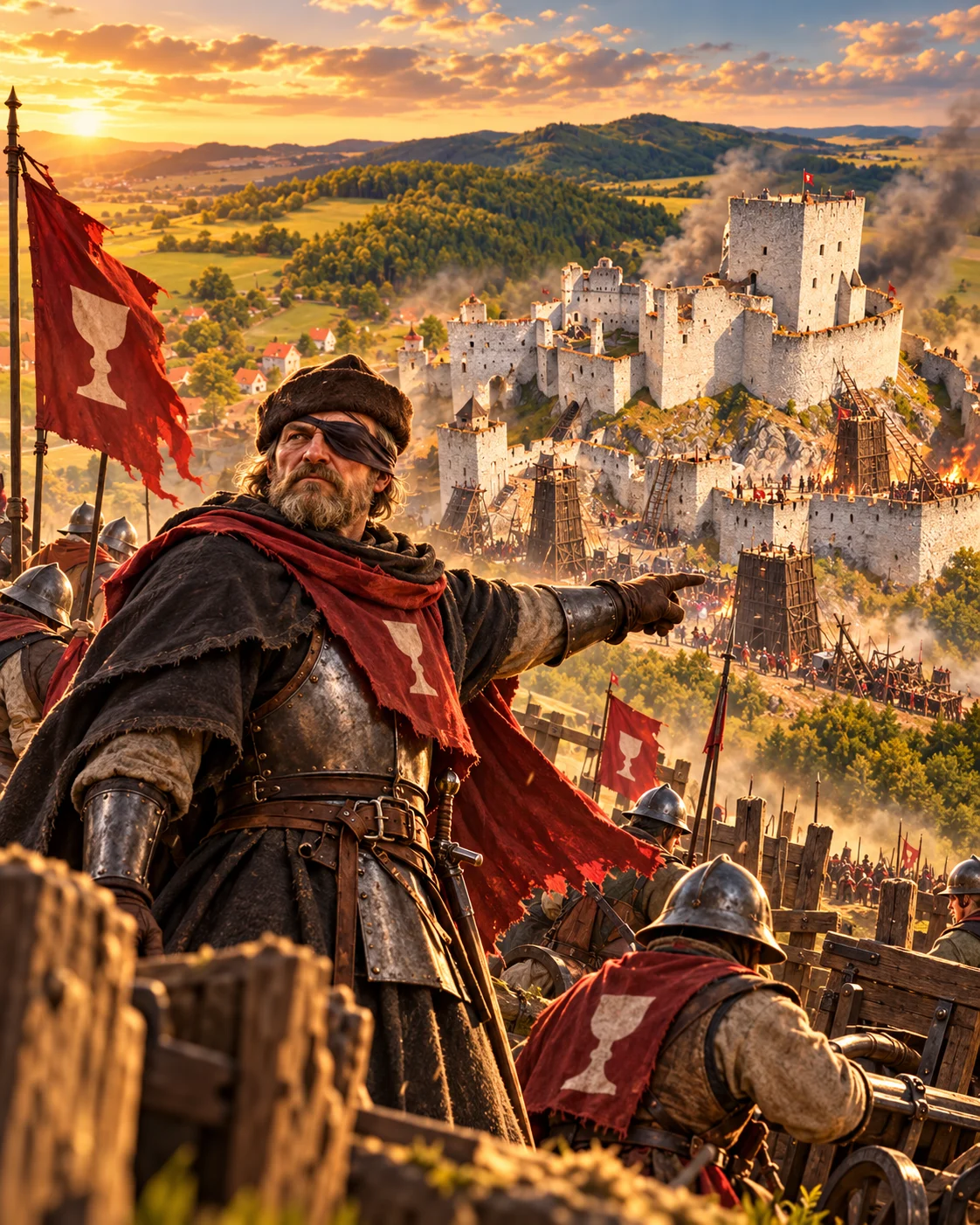
Jan Žižka's armies besiege and capture Rabí in 1420 and again in 1421. During the second siege Žižka is wounded in his right eye and loses his sight completely.
Under Půta Švihovský of Rýzmberk, Rabí undergoes its greatest rebuilding. Massive walls and forward artillery bastions encircle the castle. Its defences are among the most advanced of their time in Central Europe.
After the Thirty Years' War, Rabí gradually loses its importance. In the first half of the 18th century a fire ravages it, destroying the roofs and timber parts. The abandoned complex then also serves as a source of building stone.
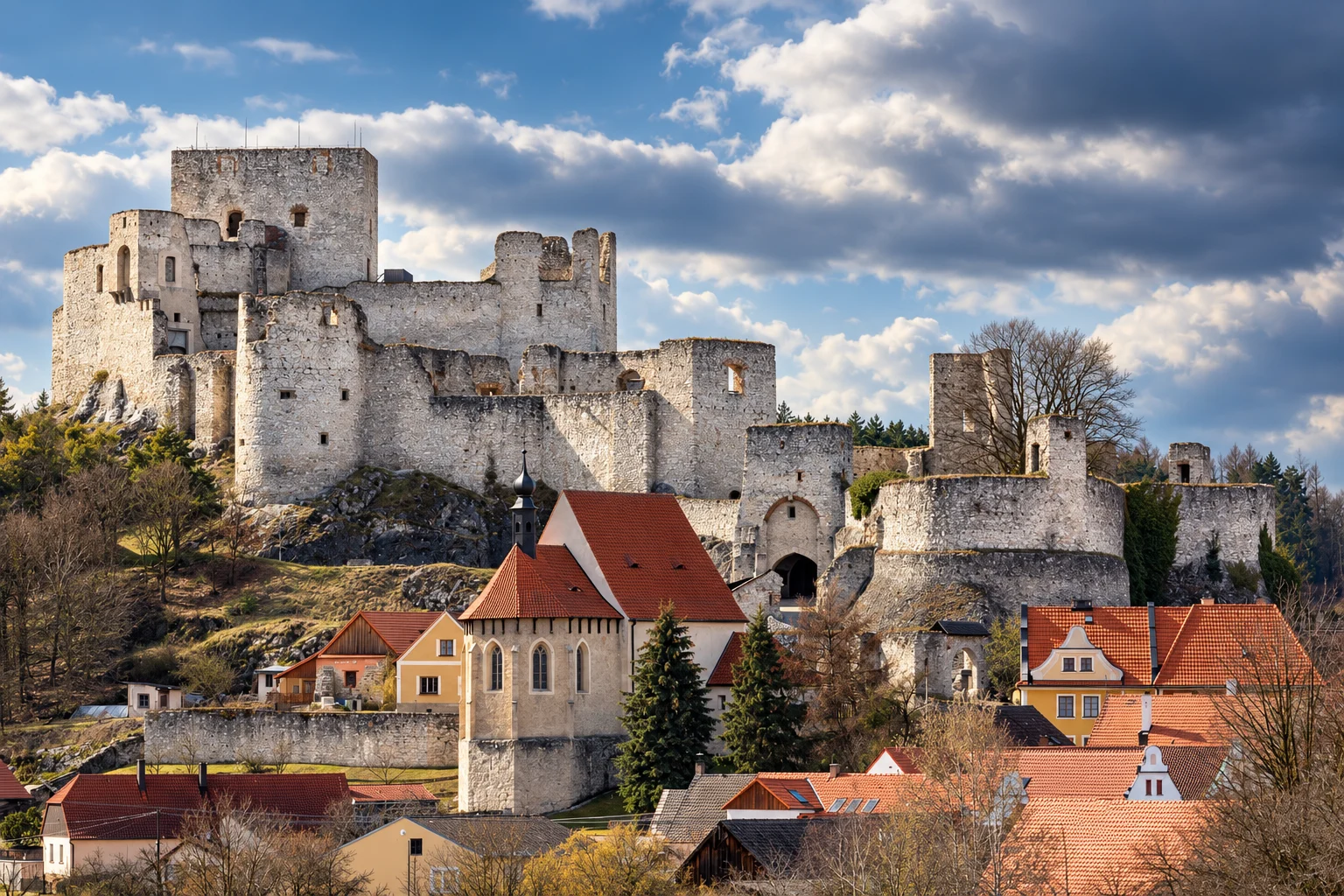
Rabí is a national cultural monument and one of the most important surviving examples of Bohemian castle architecture. The massive keep and the exceptionally extensive system of fortifications still dominate the site.
Rabí was not built to a single plan. Over several generations it expanded as the demands of its owners and the possibilities of medieval warfare grew. In roughly a hundred and fifty years, a modest seat thus grew into an extensive castle complex.
The oldest core consisted of a palace with fortifications and an outer bailey. Later came further residential and farm buildings, courtyards, stables and a new palace. The individual parts therefore form an intricate system of walls, gates and courtyards rising on several levels one above the other.
With the rise of firearms, Rabí received a massive outer ring of defences with artillery bastions. The work was so demanding that the fortifications were never finished. Even so, they represent one of the most advanced late Gothic defensive systems in the Czech lands.
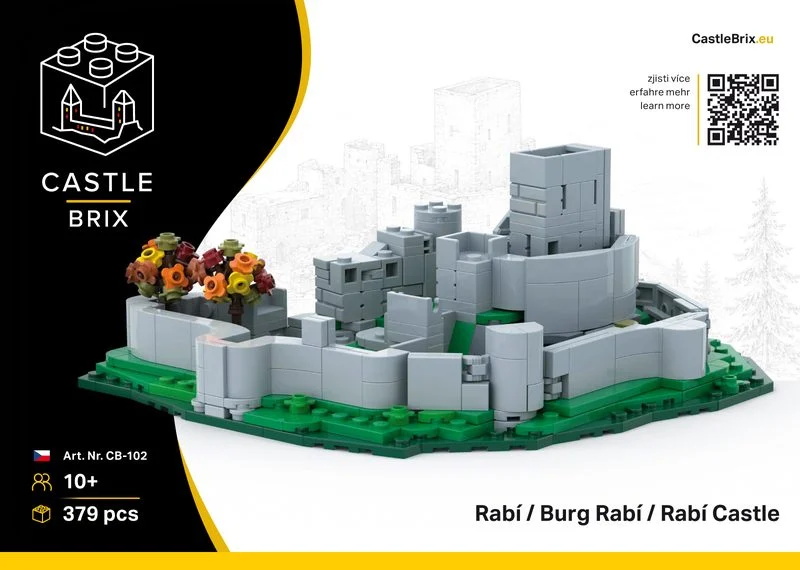
Model CB-102 keeps what makes Rabí recognisable at first glance: the massive bulk of the central tower and the sprawling fortifications. The extensive complex is scaled down to a compact model, yet its character as a fortress remains clear to see.
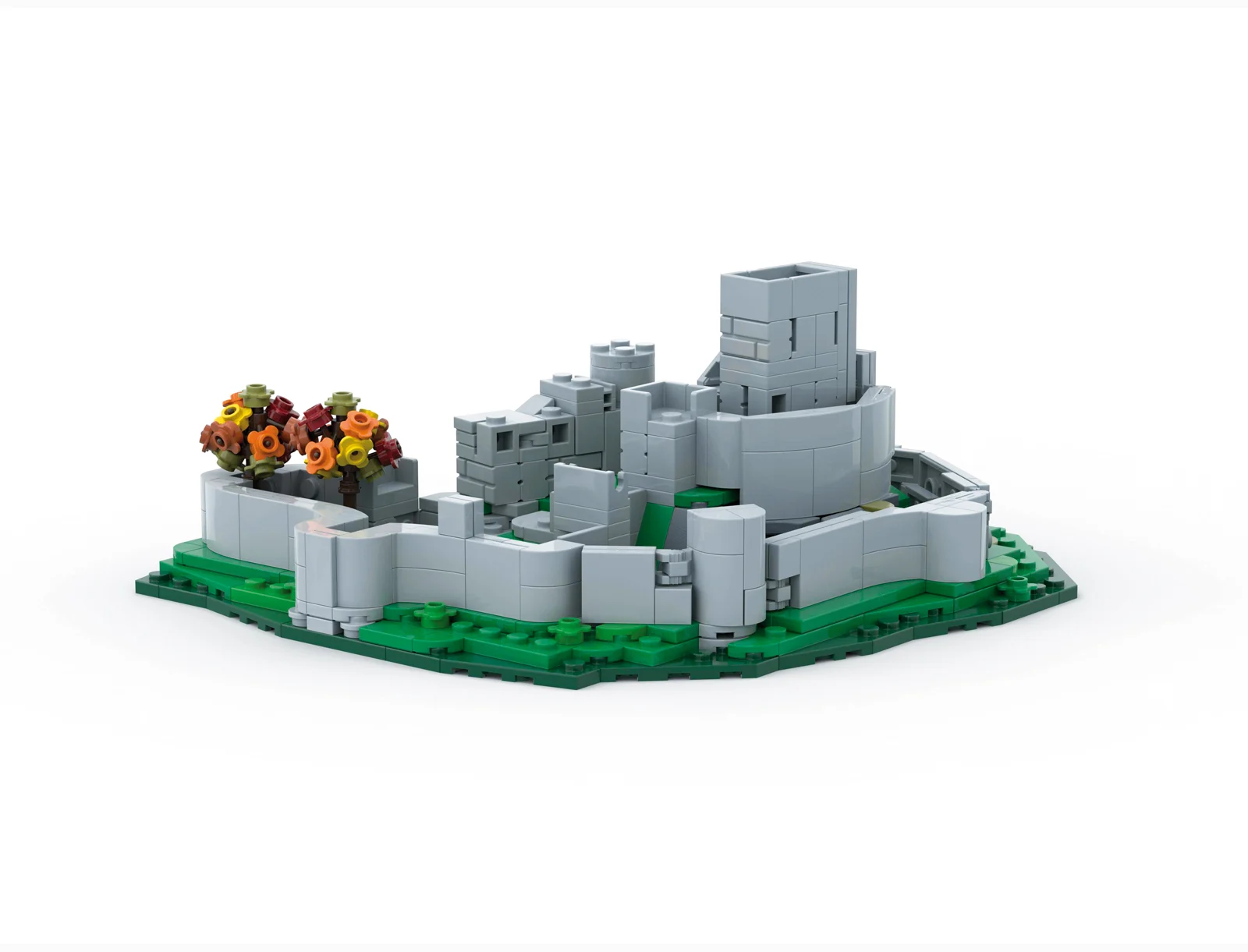
A timelapse from the first piece to the finished model.
During the Hussite Wars, Rabí sided with King Sigismund. Jan Žižka therefore marched on the castle twice – in 1420 and again in 1421. Both times the Hussites took it. During the second siege Žižka was wounded in his one remaining good eye and went blind.
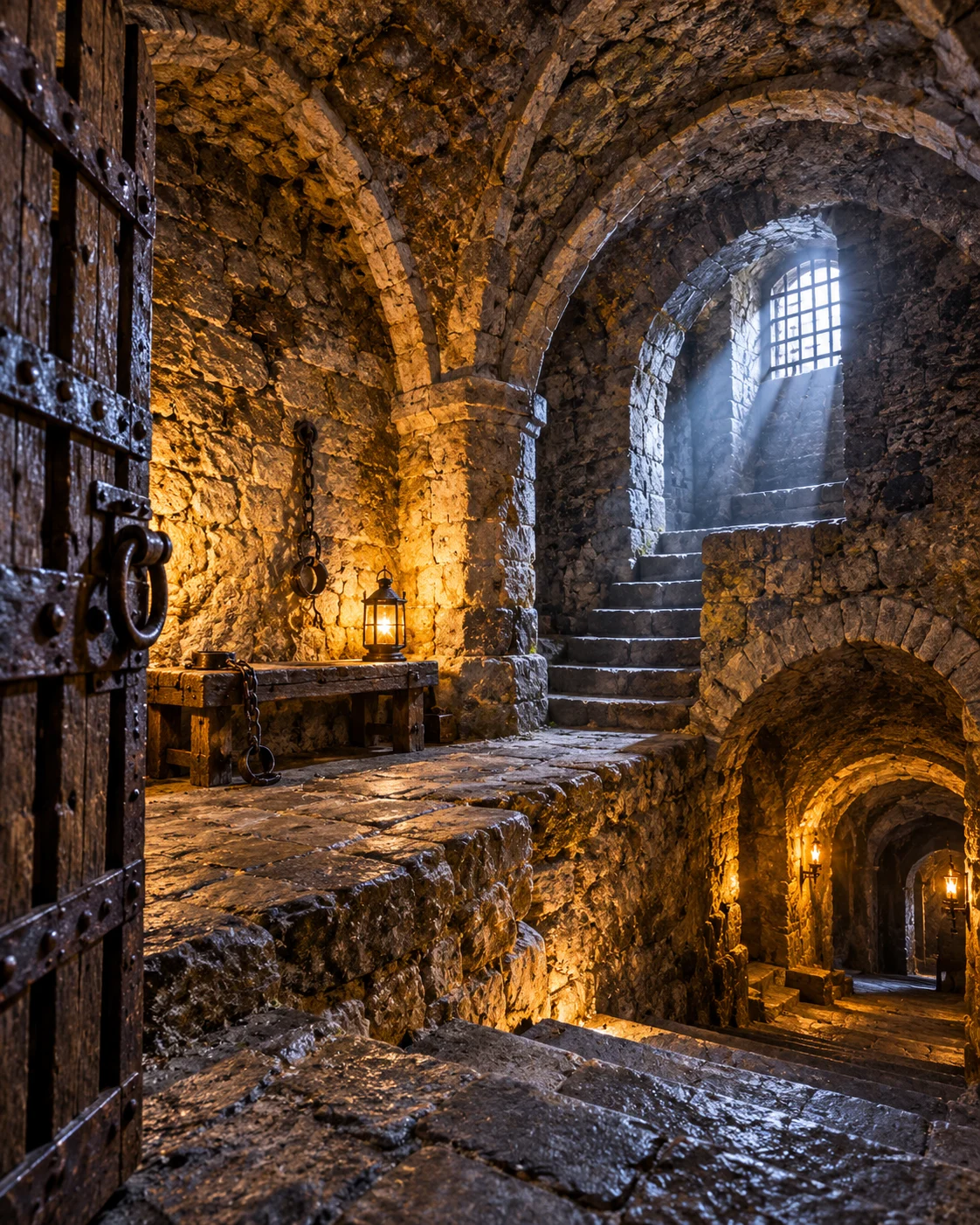
In a siege, the water supply was a matter of survival. A well was therefore hewn deep into the bedrock in the small courtyard. According to descriptions it reaches roughly 60 metres, which shows how hard it was to keep such a large fortress supplied with water.
The well’s real depth gave rise to legends. According to one of them, running water could be heard at the bottom and strange creatures and treasures were hidden in its walls. When a duck with a red ribbon was supposedly let down into the well, it reappeared in a pond in nearby Žichovice. The tale is one of Rabí’s local legends.
According to another Rabí legend, Půta Švihovský brought a tame monkey home from his travels. When it once escaped from the castle into the forest, the frightened villagers of nearby Hejné took it for the devil and killed it. When they brought their ‘catch’ to Půta, he recognised his lost pet – and is said to have imposed a special annual monkey tax on the villagers for their deed.
By the early 20th century it was clear that the ruin needed to be saved systematically. In 1920 Rabí passed into the hands of the Horažďovice heritage preservation society for the symbolic price of one crown. That was when the more extensive rescue work began that helped preserve the castle in the form we see today.
Hrad Kašperk / Burg Kašperk
Hrad Velhartice / Burg Velhartice
Pražský hrad / Prager Burg